

Table of Contents
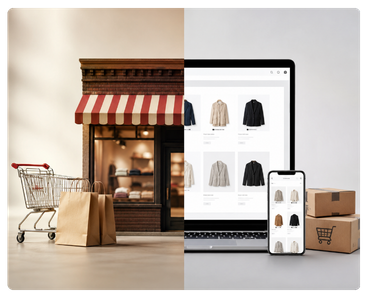
Opening a store is no longer the biggest business decision. Choosing where your customers shop is. Some businesses thrive through physical stores, while others scale faster by selling online. The real challenge is not deciding between traditional retail and eCommerce but understanding which model aligns with changing customer expectations, business goals, and long-term growth.
The benefits of eCommerce have become clearer as consumers prioritize convenience, wider product choices, and faster deliveries. At the same time, traditional retail offers advantages like in-store experiences, personal interactions, and immediate product access. Rather than replacing each other, both models are evolving to meet modern shoppers’ demands.
In this blog, we’ll compare traditional retail and eCommerce, explore key differences between the models, examine the benefits of eCommerce that matter most in 2026, and help you determine which approach best supports your business goals.
Why This Debate Matters More Than Ever in 2026
The way people shop has changed dramatically in recent years. Customers no longer rely on a single channel; they browse products online, compare prices, read reviews, visit stores, and expect seamless experiences wherever they buy. This shift has changed how businesses approach growth and customer engagement.
Rising operational costs, increasing customer expectations, and rapid technological advances have made choosing the right sales model more important than ever. While traditional retail still offers valuable in-store experiences, the benefits of eCommerce have become more attractive for businesses aiming to expand their reach and operate efficiently. Understanding the strengths and limitations of both models helps businesses make informed decisions that support long-term success.
Traditional Retail vs eCommerce: Key Differences
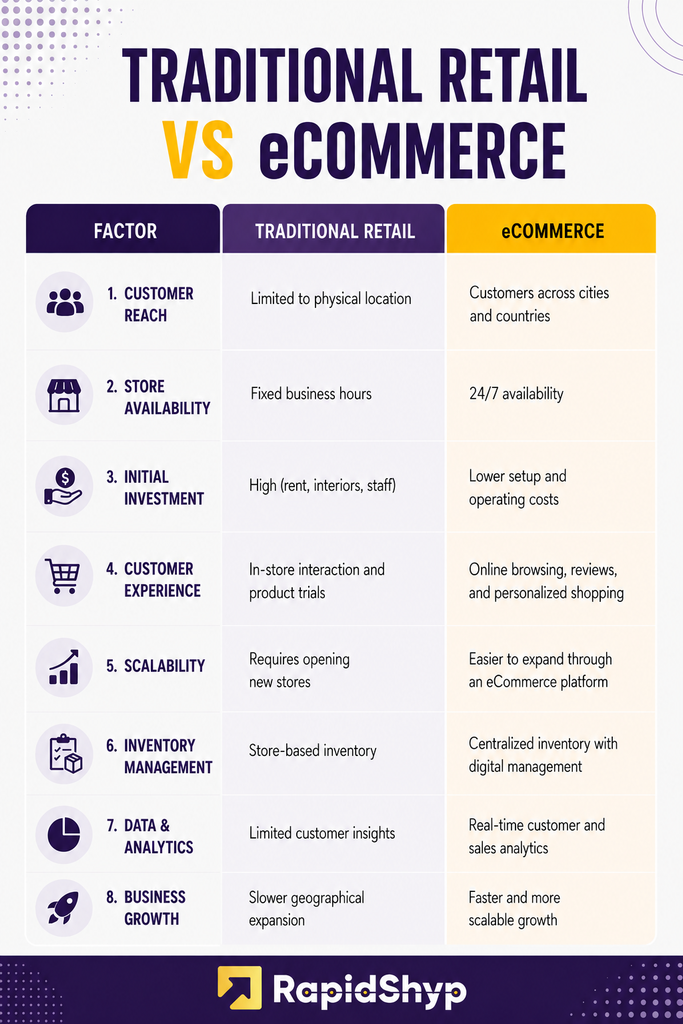
Traditional retail and eCommerce both aim to deliver products to customers but operate very differently. One relies on physical stores and face-to-face interactions; the other uses digital channels to reach customers anytime and anywhere. Understanding these differences helps businesses choose the model that fits their products, customers, and growth plans.
Benefits That Matter Most in 2026
Choosing between traditional retail and online selling is not just about following market trends but understanding which model offers greater value in today’s competitive environment. While both have strengths, changing consumer behaviour and digital adoption have made some advantages more significant than ever.
Lower Operating Costs
One of the biggest benefits of eCommerce is the ability to start and run a business with much lower investment than a physical store. Businesses save on recurring expenses like rent, utilities, store maintenance, and large staffing needs. These savings can be invested in marketing, product development, customer acquisition, or expansion. Lower operating costs also help startups and small businesses achieve profitability while scaling sustainably.
Wider Customer Reach
Traditional retail is often limited by location, making it hard to attract customers beyond a specific area. An eCommerce platform removes these barriers by allowing businesses to sell products across cities and states from a single online store. This wider reach helps businesses tap new customer segments without investing in multiple physical outlets. As a result, businesses can expand their market presence while controlling operational costs.
Better Customer Convenience
Today’s customers expect shopping to be simple, fast, and accessible. Online stores let them browse products, compare prices, read reviews, and place orders anytime without visiting a physical location. Multiple payment options, doorstep delivery, and easy returns enhance the shopping experience. Businesses that prioritize convenience are more likely to build customer loyalty and encourage repeat purchases.
Data-Driven Decision Making
Unlike traditional retail, online businesses have access to real-time insights about customer behaviour and sales performance. They track product demand, purchasing patterns, website traffic, and customer preferences to understand what works best. These insights help optimize inventory, improve marketing campaigns, and make informed pricing decisions. Instead of relying on assumptions, businesses use data to drive continuous growth and improve performance
Faster Business Growth
Expanding a physical retail business often requires opening new stores, hiring staff, and investing in infrastructure. In contrast, eCommerce enables businesses to scale more efficiently by reaching new markets and increasing sales through digital channels. New products can be introduced quickly, and operations can grow without major capital investments. This flexibility lets businesses respond faster to market opportunities while maintaining sustainable growth.
Emerging Retail Trends Influencing Business Decisions
Retail is evolving beyond the traditional “offline vs online” debate. Businesses are adopting strategies that combine technology, customer convenience, and operational efficiency to stay competitive. Understanding these trends helps businesses prepare for the future of retail.
Omnichannel Shopping
Customers no longer shop through a single channel. They may discover a product on social media, compare prices on a website, and complete the purchase via a mobile app or physical store. Businesses offering a seamless experience across multiple channels make shopping more convenient and consistent. An omnichannel approach also increases customer engagement, strengthens brand loyalty, and creates more sales opportunities.
AI-Powered Personalization
Artificial intelligence is transforming how businesses interact with customers by delivering personalized shopping experiences. Using browsing history, purchase behaviour, and preferences, AI recommends relevant products, sends targeted promotions, and customizes marketing campaigns. This personalization makes customers feel valued, increases conversion rates, and encourages repeat purchases. It also helps businesses improve retention while maximizing marketing effectiveness.
Faster Delivery Expectations
Fast delivery is a major factor influencing customer satisfaction and purchase decisions. Many shoppers expect same-day or next-day delivery, especially for everyday and urgent products. Businesses that meet these expectations gain a competitive advantage by improving the shopping experience. Investing in efficient logistics and fulfillment is essential to meet growing demand for faster deliveries.
Social Commerce
Social media platforms are no longer just marketing channels; they have become important sales channels as well. Customers increasingly discover products through influencer content, brand posts, and short-form videos before purchasing directly through social platforms. This creates new opportunities for businesses to engage potential customers where they spend their time. A strong social commerce strategy improves brand visibility, drives conversions, and expands customer reach.
Sustainable Retail Practices
Consumers are becoming more conscious of the environmental impact of their purchases. They prefer businesses that use eco-friendly packaging, reduce waste, source products responsibly, and adopt sustainable delivery practices. These initiatives support environmental goals and strengthen brand reputation and customer trust. Businesses embracing sustainability are better positioned to attract environmentally conscious consumers and build long-term loyalty.
Choosing the Right Model for Your Business
There is no single retail model that works for every business. The right choice depends on your products, target audience, budget, and long-term goals. Understanding each model helps businesses make informed decisions rather than just following industry trends.
If your business relies on in-person experiences, product demonstrations, or immediate purchases, traditional retail offers significant value. Businesses selling luxury goods, furniture, or products customers prefer to see before buying often benefit from maintaining a physical presence and building face-to-face relationships.
If your goal is to reach more customers, reduce costs, and scale efficiently, eCommerce offers greater flexibility and growth. Many businesses combine physical stores with eCommerce platforms, creating an omnichannel approach that delivers the strengths of both models and meets modern customer expectations.
Efficient logistics play a critical role in delivering a seamless customer experience regardless of the model you choose. RapidShyp simplifies shipping with AI-powered courier allocation, multi-courier integration, real-time tracking, and nationwide delivery. Whether fulfilling online orders, expanding into new markets, or managing an omnichannel business, RapidShyp helps you streamline logistics, improve delivery, and scale with confidence.
Conclusion
The choice between traditional retail and eCommerce is not about which model is better but about choosing the one that best aligns with your business goals, customer expectations, and long-term growth strategy. Traditional retail continues to offer value through in-person experiences and immediate purchases. Meanwhile, the benefits of eCommerce have made online selling an essential growth channel for businesses of all sizes.
As customer behavior evolves, success will increasingly depend on how efficiently businesses manage operations beyond the point of sale. Reliable logistics, timely deliveries, and seamless order fulfillment play a critical role in turning online sales into satisfied customers and repeat business.
Businesses that combine the right sales model with scalable technology and efficient logistics are better positioned to stay competitive in 2026 and beyond. Investing in strong operational processes today creates a foundation that supports sustainable growth, delivers better customer experiences, and adapts to changing market demands.
Frequently Asked Questions (FAQs)
1. What is the main difference between traditional retail and eCommerce?
Traditional retail operates through physical stores where customers shop in person, while eCommerce lets businesses sell products online. Each model offers unique advantages depending on the business type and customer preferences.
2. What are the biggest benefits of eCommerce for businesses?
The benefits of eCommerce include lower operating costs, wider customer reach, 24/7 sales, data-driven decision-making, and easier scalability. These advantages help businesses grow more efficiently than traditional retail alone.
3. Is traditional retail still relevant in 2026?
Yes. Traditional retail remains important for businesses that rely on product demonstrations, in-store experiences, or immediate purchases. Many successful brands combine physical stores with online selling to create an omnichannel experience.
4. Why is logistics important for eCommerce success?
Logistics impacts delivery speed, shipping costs, customer satisfaction, and repeat purchases. Efficient logistics ensure orders are fulfilled accurately and delivered on time, helping businesses build trust and support long-term growth
5. Should businesses choose traditional retail or eCommerce?
The right choice depends on your products, target audience, and business goals. Many businesses achieve the best results by combining traditional retail with an eCommerce platform to reach more customers while offering a seamless shopping experience.


Calculate Your Shipping Rates

| Courier Partner | Mode | Chargeable Weight (KG) | Shipping Rates |
|---|